



End-to-end maintenance
for healthy, thriving homes
Maintaining housing
people feel proud to call home.
Our dedicated disrepair and response teams can provide a service tailored to your needs, from a specialist emergency repair to a full planned maintenance programme.

On this page
WPS at a glance
Reimagining places
for people to thrive
Working as part of the Wates Group, WPS combines deep sector expertise and a purpose-driven approach to deliver maintenance, compliance and energy transition solutions.


What we can help with
Our dedicated teams provide a
service tailored to your needs, from
a specialist emergency repair to a
full planned maintenance
programme and data-driven
asset management strategies.

Damp

Mould and condensation

Pest infestations

Blocked drains or gutters

Collapsed ceilings

Roof repairs
Awaab’s Law
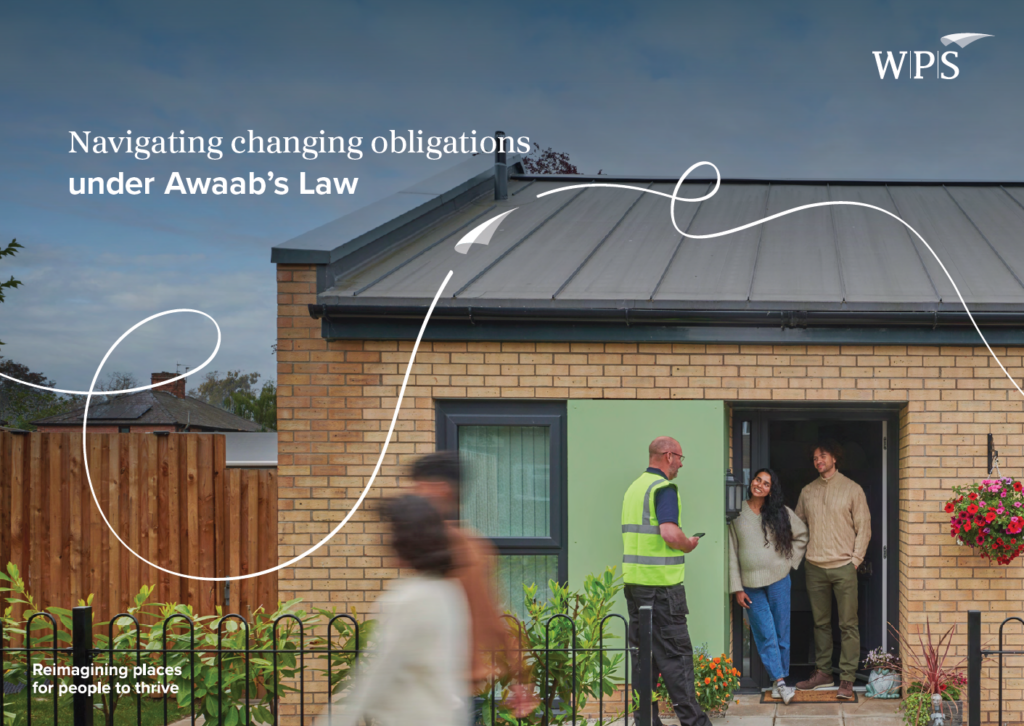
Understanding changing obligations
The Hazards in Social Housing (Prescribed Requirements) (England) Regulations 2025 are being introduced in phases. From 30 November 2026, Phase 2 will expand strict investigation and repair timescales for social housing providers beyond damp and mould and emergency hazards to include a wider range of serious housing hazards.
Phase 2 represents a significant shift from reacting to problems towards preventing them, helping to ensure residents live in safe, healthy homes.
From 30 November 2026, landlords will be required to meet strict deadlines for investigating and addressing:
- Excess cold – e.g. broken heating, poor insulation
- Excess heat – homes that become dangerously hot
- Fire and electrical hazards – faulty wiring, poor smoke detection
- Falls hazards – unsafe stairs, uneven surfaces
- Structural risks – risk of collapse, subsidence, instability
- Hygiene and food safety hazards – poor ventilation, drainage issues, pests and sanitation problems
Until then, the requirements relating to damp and mould and emergency hazards remain in force.

Awaab’s law: Phase 2
What should landlords be doing now?
- Review policies and processes to align with Phase 2 requirements.
- Identify properties that may be at risk from newly prescribed hazards.
- Ensure repairs and contractor arrangements can meet investigation and repair timescales.
- Consider resident vulnerabilities when assessing and prioritising risks.
- Maintain clear communication and robust records to demonstrate compliance.
How we can help
- Dedicated trained operatives on hazard categorisation.
- Emergency response and triage support services.
- Compliance surveys and vulnerability-led inspections.
- Documentation support, survey reports and audit-ready templates.
- Digital compliance records, KPI dashboards and management reporting.

Helping landlords deliver safer, healthier homes
Our operatives are trained to look beyond the immediate repair to assess the overall condition of the property, helping to identify wider housing hazards and factors that could impact resident health. This proactive approach supports early intervention, informed decision-making and compliance with evolving housing legislation. Where appropriate, immediate mitigation measures and initial mould treatment are completed during the first visit.
Our works management system, MRI Maintain, records and retains all property-related activity for up to six years against each UPRN and address. From investigations and resident communications to follow-on repairs and case closure, every action is time-stamped and auditable. The system interfaces with your existing IT platforms, ensuring records are accessible through your own systems and supporting efficient compliance reporting and governance.
Our technology platform supports emergency response, routine appointments, property investigations and follow-on works through a single workflow. Real-time updates, photographs, time-stamped records and management oversight provide full visibility from first report through to case closure.
Investigation outcomes, recommended actions and progress updates can be shared quickly and consistently with residents through our interfaced solution. Automated workflows and reporting functionality support compliance with evolving regulatory requirements while helping landlords keep residents informed throughout the process.
Our directly employed workforce and specialist partners deliver remedial and follow-on works with complete visibility of resident communications, access attempts, works progress and completion records. Before-and-after photographs, digital sign-off and satisfaction feedback create a robust evidential record.
We provide responsive inspection and remediation services, including emergency attendance where required. Our teams help landlords assess risks quickly, prioritise action and address hazards before they escalate, supporting both resident wellbeing and regulatory compliance.

“We don’t just maintain properties. We create environments where people and businesses can thrive, today and for the next generation.
That means a commitment to improving homes of all shapes and sizes, facing any challenge, so we can ensure that they’re safe, comfortable and compliant for residents.”
Gary Wilkinson
Regional Managing Director – WPS
Case studies
Delivering healthy homes
We work with an extensive network of EU compliant procurement and framework providers including:


Resources
Find out how our experts can support you to respond to damp, mould and disrepair issues.
Get in touch with our experts
If you’d like more information, our experts are on hand to discuss – don’t hesitate to get in touch for support.

Reimagining places for people to thrive.
Get in touch
